Puppy Socialization: A Checklist for Your Puppy’s First Months
The first months of a puppy’s life shape how they react to people, dogs and city life for years. Good socialization means gentle, positive meetings with the world, at your puppy’s pace. Here is a checklist to work through, how to keep it safe before the vaccines are done, and when your puppy can start daycare and grooming.
 The Paw CrewOctober 11, 20267 min read
01Why the first months matter
Puppies go through a sensitive period, roughly from 3 to 14 weeks of age, when new things are easier to accept. What a puppy learns is safe during this time often stays safe for life. What they never meet can feel scary later.
Socialization doesn’t stop at 14 weeks. Keep building positive experiences through the first year, especially during adolescence, when some dogs become more cautious.
02The socialization checklist
Try to give your puppy a calm, happy experience with each of these, a little at a time:
- People: men, women, children, seniors, people with beards, hats, sunglasses, uniforms, umbrellas, wheelchairs and bikes
- Sounds: traffic, buses, sirens, the vacuum, doorbells, construction, snow plows, and fireworks or thunder (start with recordings at low volume)
- Surfaces: grass, gravel, tile, metal grates, wet sidewalks, stairs, elevators and snow
- Places: car rides, a friend’s home, a quiet café terrace, the vet’s waiting room for a happy visit with treats
- Handling: touching paws, ears, mouth and tail, brushing, a towel dry and gentle nail trims
- Being alone: short, calm moments alone in a safe space, so your puppy learns you always come back
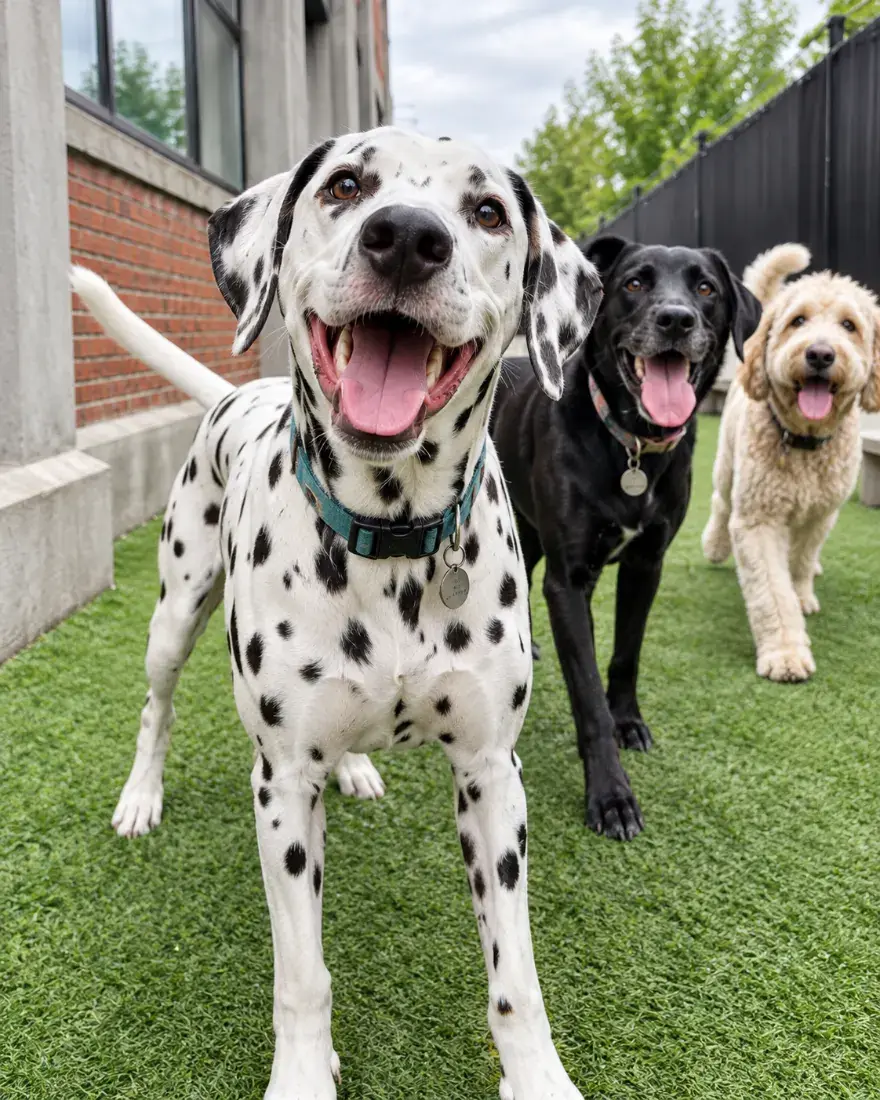
- Other dogs: calm, healthy, vaccinated adult dogs and other puppies in a controlled setting
03Staying safe before the vaccines are done
Puppies need several rounds of vaccines before they are fully protected, but waiting until the end to socialize means missing the best weeks. The answer is to socialize carefully.
- Ask your vet when your puppy can go to places where many dogs walk, and when they can meet other dogs
- Carry your puppy to see the city: they can watch, sniff the air and hear the sounds without touching the ground
- Invite healthy, vaccinated adult dogs you know to your home or yard
- Avoid dog parks and busy dog areas until your vet says it’s okay
- Choose puppy classes that ask for vaccine records
04Getting your puppy ready for grooming
Puppies who learn early that grooming is fun grow into calm adult clients. Start at home:
- Touch paws and nails every day, with a treat each time
- Brush for a minute or two, even if the coat is short
- Let your puppy hear a hair dryer on low from across the room
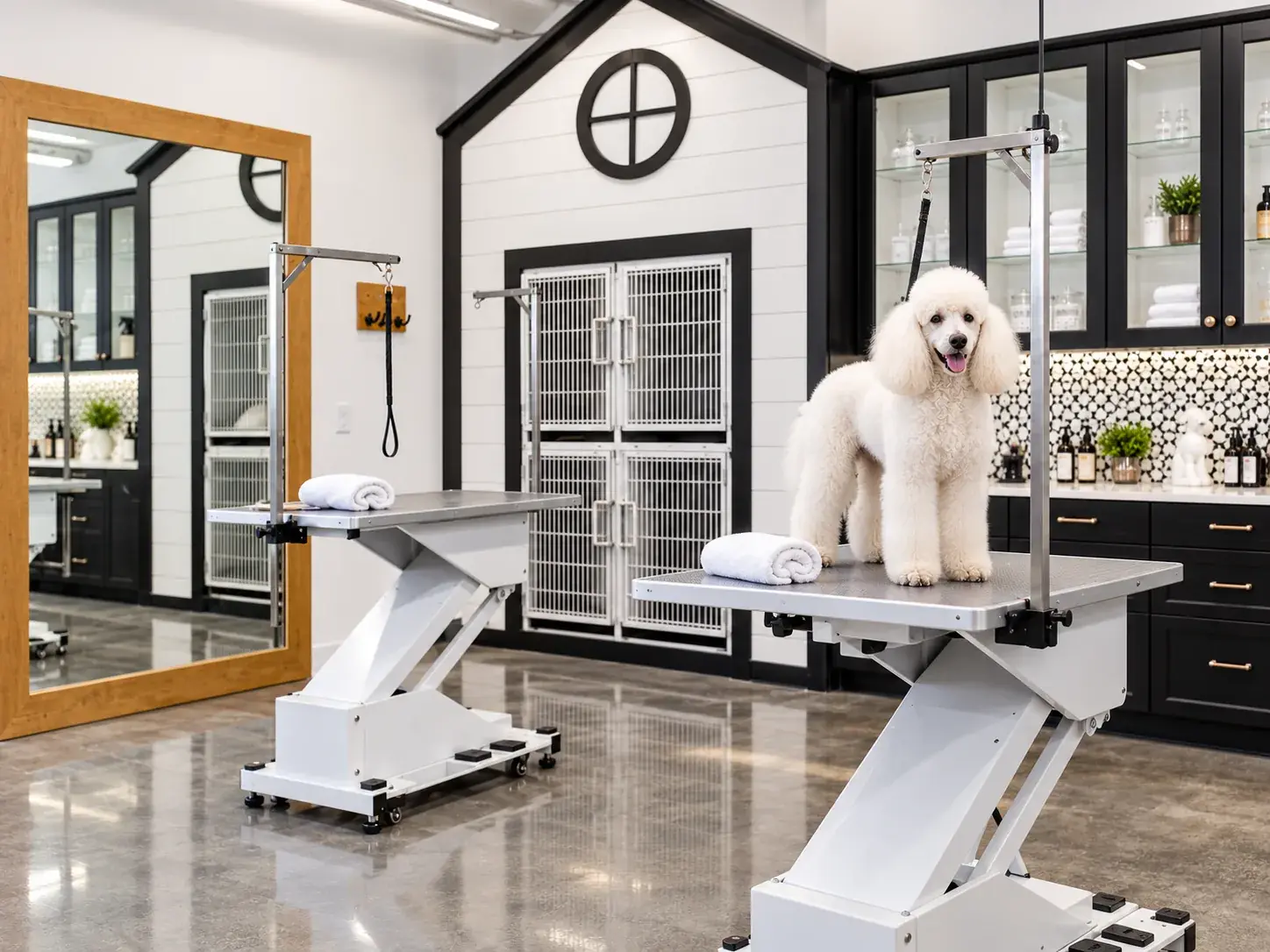
- Visit Chloe’s Spaw for a walk-in nail trim to meet the groomers and the smells
Baths and grooming at Chloe’s Spaw require up-to-date DA2PP (DHPP) and rabies vaccines. Ask your vet when your puppy’s rabies vaccine is due.
05When your puppy can start daycare
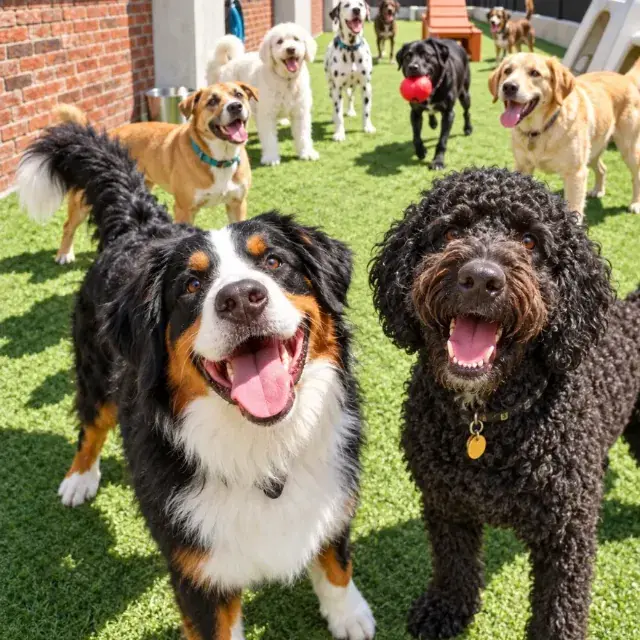
Puppies are welcome at DV Playcare once they have had their vaccines. They play in a separate puppy kindergarten, with other puppies and a Paw Crew trained in canine behaviour and positive reinforcement.
- Vaccines: Bordetella (within 6 months), DA2PP and rabies, plus heartworm, flea and tick prevention
- A one-time $80 behaviour evaluation before the first day
- Half day (up to 5 hours) $45, full day $55, with passes for regular days
- Dogs older than 11 months need to be spayed or neutered to keep coming to daycare (call us if a medical reason prevents it)

Puppy socialization FAQ
Written by
The Paw Crew
The Paw Crew is the team that cares for every dog at Doggieville MTL: boarding, daycare, grooming and pool staff who are First Aid certified and spend every day with dogs of all sizes and ages.
Meet the team behind Doggieville MTL